
It’s happening again. You can feel it around 7:30 PM. We are deep in February 2026, and while the Papamoa days are still glorious beach weather, the evenings have developed that distinct late-summer bite. You’ve had the BBQ on, the chilly bin is still full, but suddenly everyone is looking for a hoodie.
We aren’t ready to retreat indoors just yet. We live in the Bay of Plenty for the outdoor lifestyle, after all.
The natural solution to extending those evenings on the deck or patio is heat. And nothing beats the primal draw of an open flame. A fire pit is the ultimate gathering point; it changes the whole dynamic of a backyard. But before you rush out and buy a brazier or start stacking concrete blocks, you need to navigate the slightly confusing world of regulations.
As your local Papamoa landscape suppliers, we get asked constantly: “Can I actually have a fire pit here?” The answer is usually yes, but with some very important conditions.
Here is your guide to navigating outdoor fire pit rules NZ—specifically looking at our situation here in the Bay—and how to design a safe, stunning heating zone before autumn kicks in properly.
Cracking the Code: Outdoor Fire Pit Rules NZ (The Papamoa Edition)
It’s easy to get confused because the rules change depending on where you are in the country.
If you’re talking to mates down in Christchurch, they’ll tell you wood fires are practically banned due to their strict Clean Air zones. If you’re talking to someone in rural Southland, it’s a different story.
Here in Papamoa and the wider Tauranga area, we sit somewhere in the middle, but we have our own specific challenges: wind and dry sandy soil.
1. The “Fire Season” is Everything
This is the single most important rule for the Bay of Plenty. Fire and Emergency New Zealand (FENZ) controls when you can light up.
Because our sandy soils dry out incredibly fast in summer, and we get those stiff sea breezes, Papamoa is often placed in a Prohibited Fire Season (Total Fire Ban) or a Restricted Fire Season (Permit Required) during February and March.
- The Rule: Before you even think about striking a match, you must check the current local fire danger status at checkitsalright.nz.
- The Reality: If it’s a total ban, that wood-burning brazier is just garden art until it rains. Lighting it could land you massive fines.
2. Smoke and Nuisance Rules
Even in winter, when the fire risk is low, you can’t just burn anything. Tauranga City Council bylaws state that your fire must not create a “nuisance” to neighbours through offensive smoke or ash.
- Do: Burn only clean, dry, seasoned timber or charcoal.
- Don’t: Burn treated timber (like offcuts from your new deck), green garden waste, plastic, or household rubbish. This creates toxic, thick smoke and is the fastest way to get a visit from council enforcement.
3. Gas vs. Wood
Because of the strict summer fire bans in the Bay, many Papamoa homeowners are bypassing wood altogether.
- Gas Fire Tables/Pits (LPG or Natural Gas): These are generally not considered “open fires” by FENZ. They can usually be used even during a prohibited fire season because they don’t produce sparks or embers and can be turned off instantly. Always double-check the specific declaration for the current season, but gas is usually the safer bet for year-round use.
Designing Your “Safety Zone”
Okay, you know the rules. You’ve decided whether you’re going gas or wood. Now, as landscapers, we need to talk about where you put it.
You cannot put a fire pit directly onto a wooden deck or straight onto dry lawn grass. You need to create a dedicated, non-combustible zone. This isn’t just about safety; it’s about creating a defined feature in your garden.
The Base: Pavers and Stone
In Papamoa, we are building on sand. You need a stable, flat, fire-resistant base.
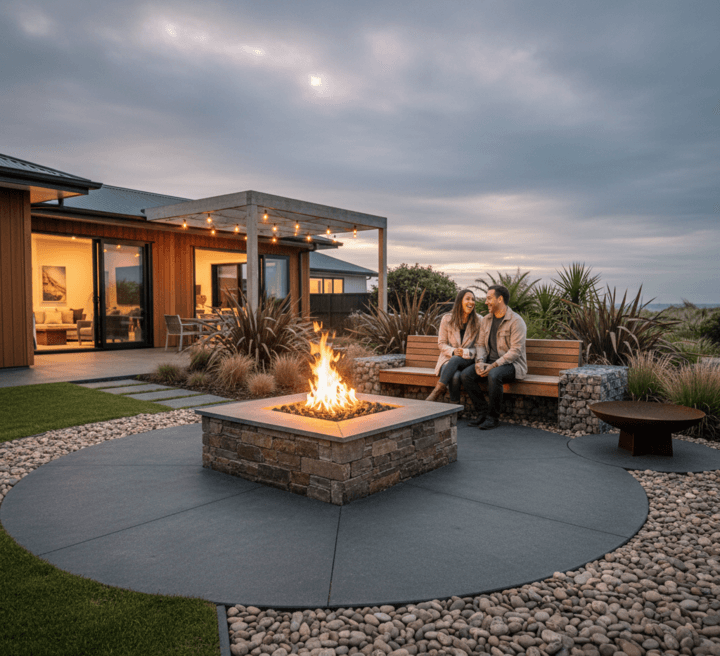
- Large Format Pavers: Creating a “floating” pad using large concrete pavers is a very modern look. It provides a solid, level surface for a portable bowl and ensures no heat transfers to the ground below.
- Crushed Chip or Pebbles: A more rustic, coastal option is to excavate a circle, lay down weed matting, and fill it with a deep layer of decorative stone.
- Recommendation: We love using a 20-40mm River Stone or a darker Waitaha pebble for this. They look great, drain instantly when it rains, and provide a safe “spark zone” around the actual fire pit. If an ember jumps out, it lands on stone, not dry grass.
(Make sure you check out our range of Decorative Pebbles down at the yard to see what textures suit your house).
The Surround: Seating and Screening
Once the base is down, think about the experience. You want built-in seating that is close enough for warmth but far enough back for safety. Gabion baskets filled with local river stone, topped with timber planks, are incredibly popular in Papamoa right now—they handle the coastal elements perfectly and look substantial.
The Big Decision: Built-in Beauty vs. Portable Freedom
Are you building a permanent feature, or do you want flexibility?
The High-End Permanent Feature
If you want to add serious value to your property, a built-in outdoor fireplace is the way to go. These become the anchor point of the entire outdoor living area.
In Papamoa, the trend is heavily toward Schist cladding. A concrete block fireplace clad in Central Otago schist looks incredible against the coastal planting of a Bay backyard. It brings a rugged, luxurious texture that holds heat well.
- The Caveat: A permanent, built-in structure nearly always requires a building consent from the Tauranga City Council. You need to factor this into your timeline and budget.
The Portable Route
For flexibility, it’s hard to beat a cast iron bowl or a corten steel brazier. You can move them depending on the wind direction, or pack them away in the shed during winter storms.
While we don’t sell the braziers themselves, we supply the essential materials to make them look good and sit safely—the pavers for them to sit on, and the decorative stones to surround them.
Don’t Get Left in the Cold
Autumn is arguably the best time of year in the Bay of Plenty. The sea is still warm, the crowds have thinned out, and the humidity drops. Don’t let the cooler evenings chase you inside.
By understanding the local outdoor fire pit rules NZ and preparing a safe, fire-resistant base now, you can be ready to light up the moment FENZ gives the green light.
Come down and see us at the yard in Papamoa Beach. Bring down a photo of your backyard, and let’s chat about which pavers, stones, or cladding will create the perfect warm spot for your autumn evenings.