
When you’re planning a landscaping project in Papamoa, Tauranga or the wider Bay of Plenty, one of the first decisions is whether to buy materials in bulk or in bags. The right choice depends on the size of the job, access to your property, how quickly you’ll use the material, and how much you want to spend.
Here’s a practical guide to help you decide.
The Three Main Options
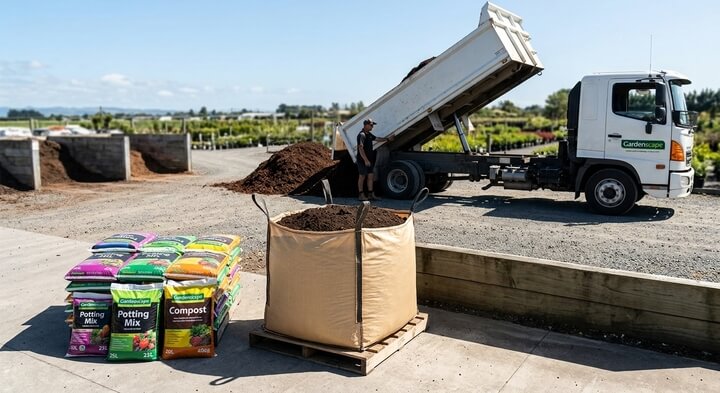
Most yards offer three formats:
1. Retail bags
Small, car-friendly bags you can lift and store easily. Ideal for small top-ups, potting mix, or tight spaces where a truck can’t reach.
2. Bulk bags (bulka bags)
Large woven bags that typically hold around 1 cubic metre (or roughly a tonne depending on the material). They sit between retail bags and loose bulk — contained, easier to place, and better value than dozens of small bags.
3. Loose bulk
Material tipped straight off a truck onto your driveway or designated drop zone. This is the most cost-effective option for larger volumes and creates the least packaging waste.
At Gardenscape we stock retail and loose, so you can mix and match on the same order.
How Much Material Equals a Cubic Metre?
A quick way to decide is to work out how many bags equal one cubic metre:
- Soil, mulch or compost in 25-litre bags ≈ 40 bags per cubic metre
- Heavier materials such as sand or gravel in 20 kg bags can easily reach 70+ bags per cubic metre
Carrying 40 bags through the house, splitting them open, and disposing of the plastic is enough to convince most people that bulk (or a bulk bag) is the smarter option once you pass roughly one-third of a cubic metre of any single material.
When Bagged Products Are the Better Choice
Bags win in these situations:
- Small jobs or top-ups (a couple of pots, one raised bed, or a small garden refresh)
- Tight access — many Papamoa and Mount Maunganui townhouses have limited side access
- You need to store material for weeks or months
- You only need small amounts of several different products
- Materials that must stay completely dry (cement, rapid-set concrete, some fertilisers)
When Loose Bulk Makes Sense
Choose loose bulk when:
- You’re covering large garden beds, mulching extensive areas, preparing a new lawn, or laying a base for paving
- The material will be used within a few days
- There is clear truck access and a suitable drop zone
- You want to avoid a large pile of plastic waste
The main trade-offs are that loose material can spread, get wet, or blow around if left sitting. Have a plan (and a tarp if needed) ready for delivery day.
Where Bulk Bags Fit Best
Bulk bags are ideal when you want the value of bulk without the mess of a loose pile. They’re useful for:
- Staged projects spread over several weekends
- Shared driveways or tight sites where a loose tip would cause problems
- Situations where you want the material contained and easier to move in stages
Delivery Tips for Papamoa & Tauranga
We deliver across Papamoa, Tauranga and the surrounding Bay of Plenty. Before ordering, think about:
- Exactly where the truck can safely tip or place a bulk bag
- Whether the drop zone is clear of cars, fences and power lines
- Whether any council rules apply if material needs to sit on the berm
You can combine bulk and bagged products on the same delivery — for example a load of bulk mulch plus a few bags of compost or landscape lock.
Quick Decision Guide
A few bags or less
Retail bags
Around 0.3–1 m³
Bulk bag or loose bulk
1 m³ or more of one material
Loose bulk
Tight access / no truck access
Retail bags or bulk bag
Need to store material for weeks
Bags or bulk bag
Ready to Order?
Not sure which format suits your project? Tell us what you need and a bit about access to your property. We’ll recommend the best combination of bulk, bulk bags and retail bags and get everything on one delivery.
Gardenscape Papamoa Landscape Supplies
1 Ashley Place, Papamoa Beach
Phone: 07 542 4687 or 027 487 0139
Order online at gardenscape.co.nz
Whether you’re refreshing a few garden beds or tackling a full landscaping project, choosing the right format saves time, money and effort.